Frequently Asked Questions
The most-asked questions about cell & molecular biology.
What exactly is cell & molecular biology?
It is the branch of life sciences that studies how living cells operate from the inside out, examining organelles, proteins, nucleic acids, and the chemical pathways that sustain organisms. Think of it as the engine-room discipline of biology, bridging whole-organism physiology and pure biochemistry.
Who are the foundational figures every newcomer should know?
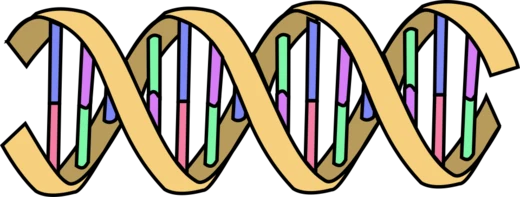
Essential names include James Watson, Francis Crick, and Rosalind Franklin for elucidating DNA's double-helix structure, Barbara McClintock for transposable elements, and more recently Jennifer Doudna and Emmanuelle Charpentier for CRISPR gene editing. Paul Ehrlich, Meselson & Stahl, and Craig Mello & Andrew Fire also anchor key milestones in the field.
Where should a complete beginner start learning?
A strong entry point is a standard introductory text such as Alberts' Molecular Biology of the Cell, paired with a course covering DNA replication, transcription, and translation. Supplementing with animated explainers (e.g., CrashCourse Biology) helps make 3D structures and metabolic pathways click before tackling primary literature.
What is the Central Dogma and why does it matter so much?
Proposed by Francis Crick in 1958, it states that genetic information flows from DNA to RNA to protein. It remains the backbone of gene-expression biology, even though modern discoveries like non-coding RNAs and epigenetic regulation have added significant nuance.
What are the major organelles in a eukaryotic cell?
The core set includes the nucleus (genetic storage), mitochondria (ATP production), rough and smooth endoplasmic reticulum (protein and lipid synthesis), the Golgi apparatus (sorting and packaging), lysosomes (degradation), and the cytoskeleton (shape and motility). Prokaryotes lack membrane-bound compartments and carry out equivalent functions in the open cytoplasm.
What's the practical difference between cell biology and molecular biology?
Cell biology treats the cell as an integrated unit, focusing on structure, division, signaling, and cell–cell interactions. Molecular biology zooms further into the macromolecules and biochemical reactions that drive those processes, though in practice most labs blend both approaches.
What are some of the most landmark 'wow' discoveries in the field?
The 1953 double-helix model, the 1970s demonstration of intron splicing, the 1997 birth of Dolly the sheep, and the 2012 proof-of-concept for CRISPR-Cas9 editing each reshaped what was thought possible. Most of these earned Nobel Prizes and spawned entirely new subfields.
Why does the cell membrane get so much attention?
It is the selective gatekeeper controlling everything that enters or leaves the cell, and its fluid-mosaic phospholipid bilayer (refined by Singer and Nicolson in 1972) is one of biology's most elegant structural solutions. Understanding membrane receptors, transporters, and downstream signaling cascades is central to pharmacology and disease research.
What are the hottest frontiers in the field right now?
CRISPR-based clinical therapies, single-cell and spatial transcriptomics, and AI-driven protein-structure prediction (exemplified by AlphaFold) are advancing rapidly. Synthetic biology and mRNA vaccine platforms have also moved from lab curiosities to mainstream medicine within just a few years.
Do I need a PhD to contribute meaningfully to the field?
Not at all—undergraduate research, laboratory-technician roles, and bioinformatics positions all feed directly into discovery, and many breakthroughs begin as a curious student's side project. That said, the field is highly specialized, so most independent research-track careers do require graduate training in a particular sub-area.