Neurotransmitter
Chemical messengers that transmit signals across synapses.

Peter Duncan · CC BY-SA 4.0
A neurotransmitter is a signaling molecule secreted by a neuron to affect another cell across a synapse. The cell receiving the signal, or target cell, may be another neuron, but could also be a gland or muscle cell.
- field
- Neuroscience
- known_for
- Chemical signaling between neurons across synapses
- first_identified
- Acetylcholine (ACh) discovered by Otto Loewi
- common_examples
- Glutamate, GABA, acetylcholine, glycine, dopamine, norepinephrine
Lore & Background
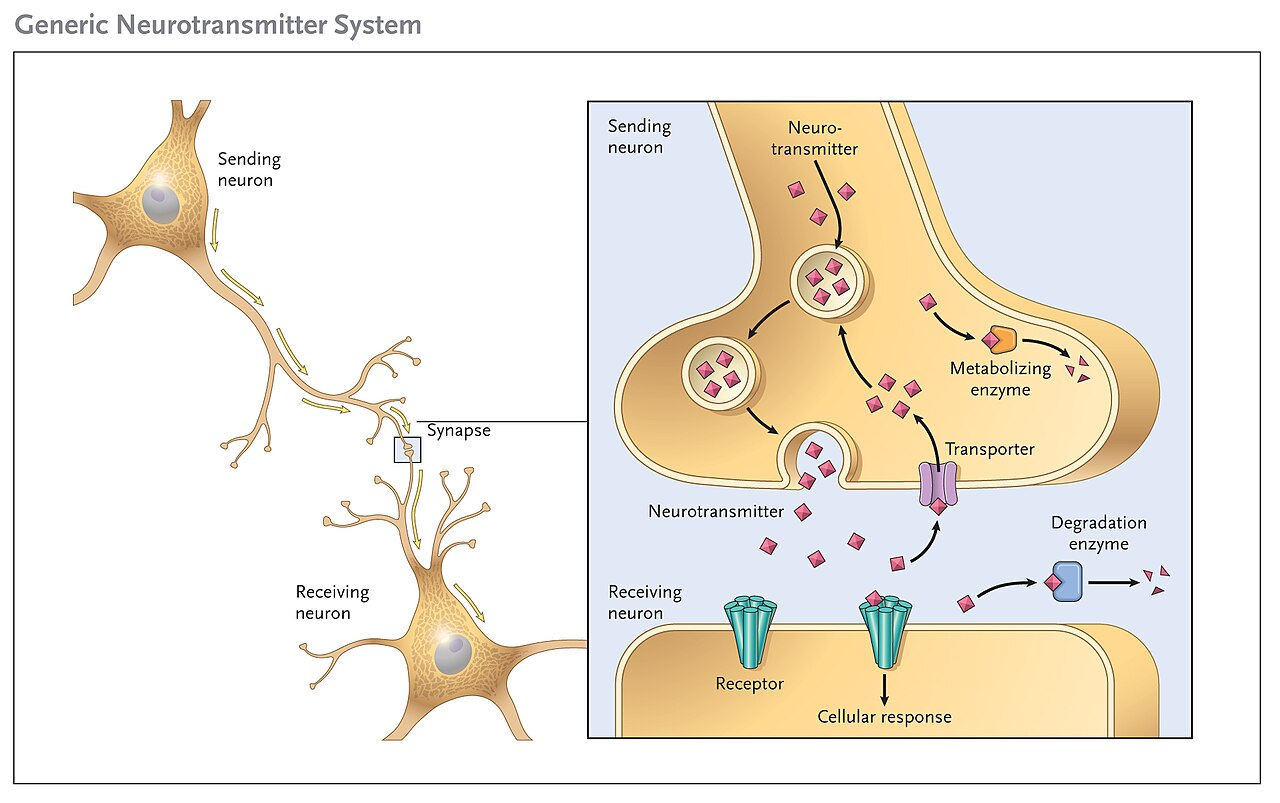
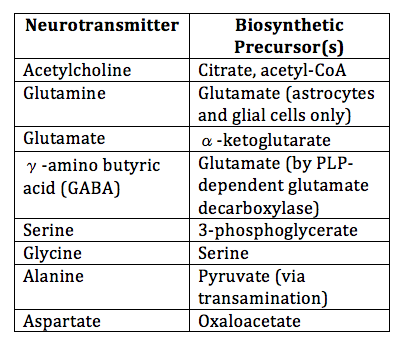
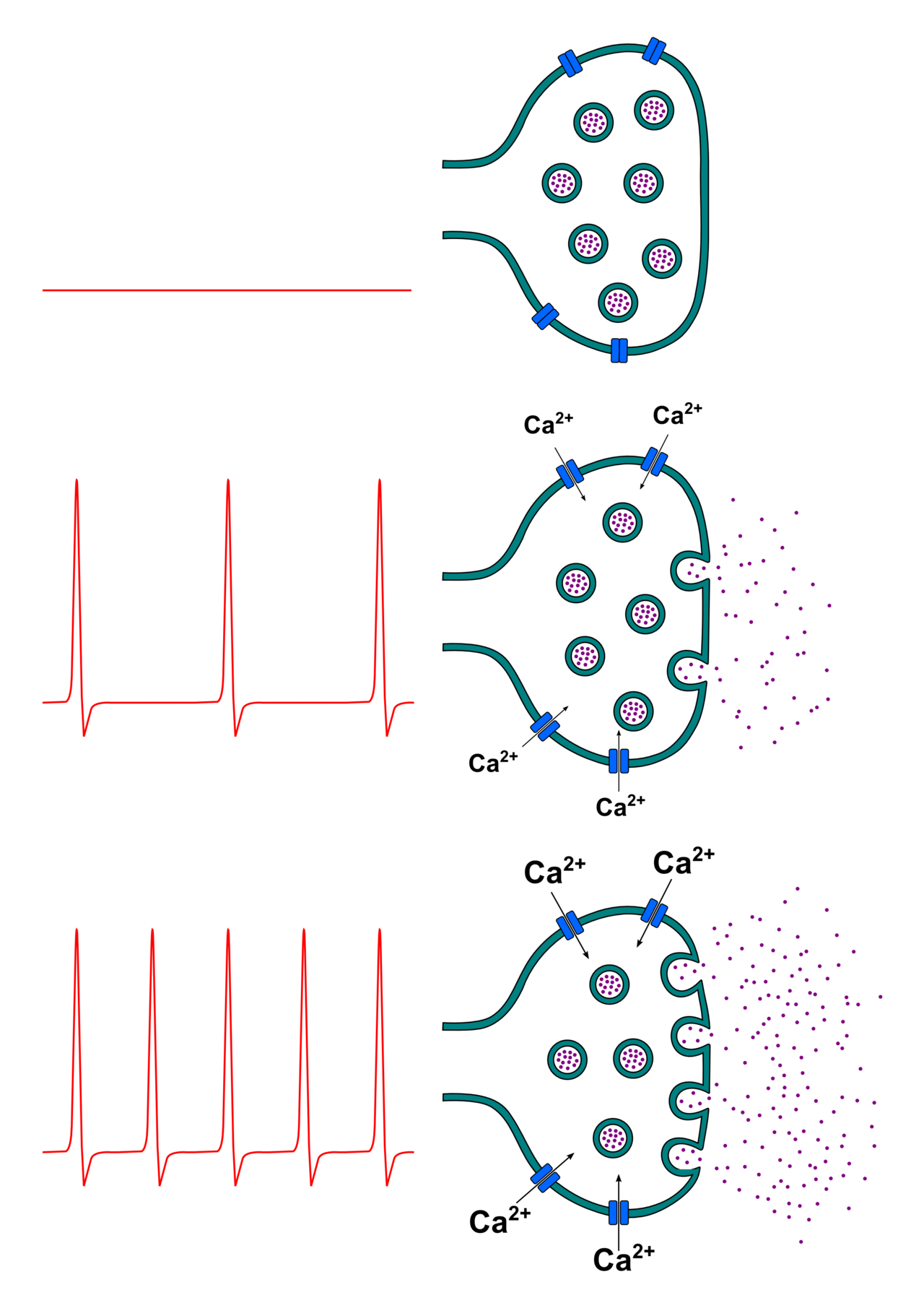
Neurotransmitters are generally synthesized in neurons from precursor molecules such as amino acids, which are readily available and require few biosynthetic steps. They are stored in synaptic vesicles clustered near the cell membrane at the axon terminal, though some, like nitric oxide and carbon monoxide, are synthesized and released immediately without storage. Release typically occurs via exocytosis in response to an action potential, but baseline release also happens without electrical stimulation. After diffusing across the synaptic cleft, neurotransmitters bind to receptors on the target cell, with the effect—excitatory, inhibitory, or modulatory—determined by the receptor type. To avoid continuous activation, neurotransmitters are removed through diffusion, enzyme degradation, or reuptake into the presynaptic neuron.
Reader's Guide
Neurotransmitters are fundamental to neural communication, enabling the flow of information through complex networks. The identification of neurotransmitters relies on criteria including synthesis within the neuron, release upon activation, experimental replication of effects, and a removal mechanism. Advances in pharmacology and genetics have expanded the definition to include chemicals that carry messages, alter synapse structure, or communicate via reverse-direction signals. The anatomical localization of neurotransmitters is often determined using immunocytochemical techniques, which have revealed co-localization of multiple transmitters in a single neuron. Understanding neurotransmitter action and elimination pathways has implications for neurological disorders and drug action, as seen with cocaine blocking dopamine reuptake.
Did You Know?
- Some neurotransmitters, like nitric oxide and carbon monoxide, are synthesized and released immediately without being stored in vesicles.
- Acetylcholine is eliminated by the enzyme acetylcholinesterase, which cleaves its acetyl group; the remaining choline is recycled.
- Cocaine blocks a dopamine transporter responsible for reuptake, causing dopamine to remain longer in the synaptic cleft.
The Chemical Dialogue at the Synapse
Neurotransmitters are signaling molecules that a neuron releases to influence a neighboring cell across a gap called the synapse. That target cell might be another neuron, but it can equally be a muscle fiber or a gland. The process begins with synthesis: most neurotransmitters are built from simple, abundant precursors like amino acids, often requiring only a handful of biosynthetic steps. Once manufactured, they are typically packaged into synaptic vesicles clustered near the cell membrane at the axon terminal. When an electrical signal known as an action potential arrives, those vesicles fuse with the membrane and dump their cargo into the synaptic cleft through exocytosis. A low-level baseline release also occurs without any electrical trigger. The released molecules then diffuse across the cleft and lock onto specific receptors on the receiving cell. Critically, the same neurotransmitter can produce excitation, inhibition, or modulation depending entirely on which receptor it encounters. This receptor-dependent outcome is what gives the nervous system its extraordinary range of responses.
From Electrical Assumptions to Chemical Proof
For much of the nineteenth century and into the early 1900s, the prevailing view in neuroscience was that neurons talked to one another primarily through electrical signals. That assumption began to crumble when the histologist Ramón y Cajal examined tissue under the microscope and noticed a tiny twenty-to-forty nanometer gap between adjacent neurons—what we now call the synaptic cleft. The very existence of that gap implied something chemical had to bridge it. Working with frogs, he manipulated the volume of saline solution surrounding the vagus nerve and demonstrated that he could slow the heart rate by controlling chemical concentrations in that fluid. His findings confirmed that sympathetic regulation of cardiac function operates through chemical messengers rather than pure electrical conduction. Loewi is also credited with identifying acetylcholine, the first neurotransmitter ever recognized. His work fundamentally redirected the field toward a chemical model of neural communication.
A Vast Chemical Vocabulary
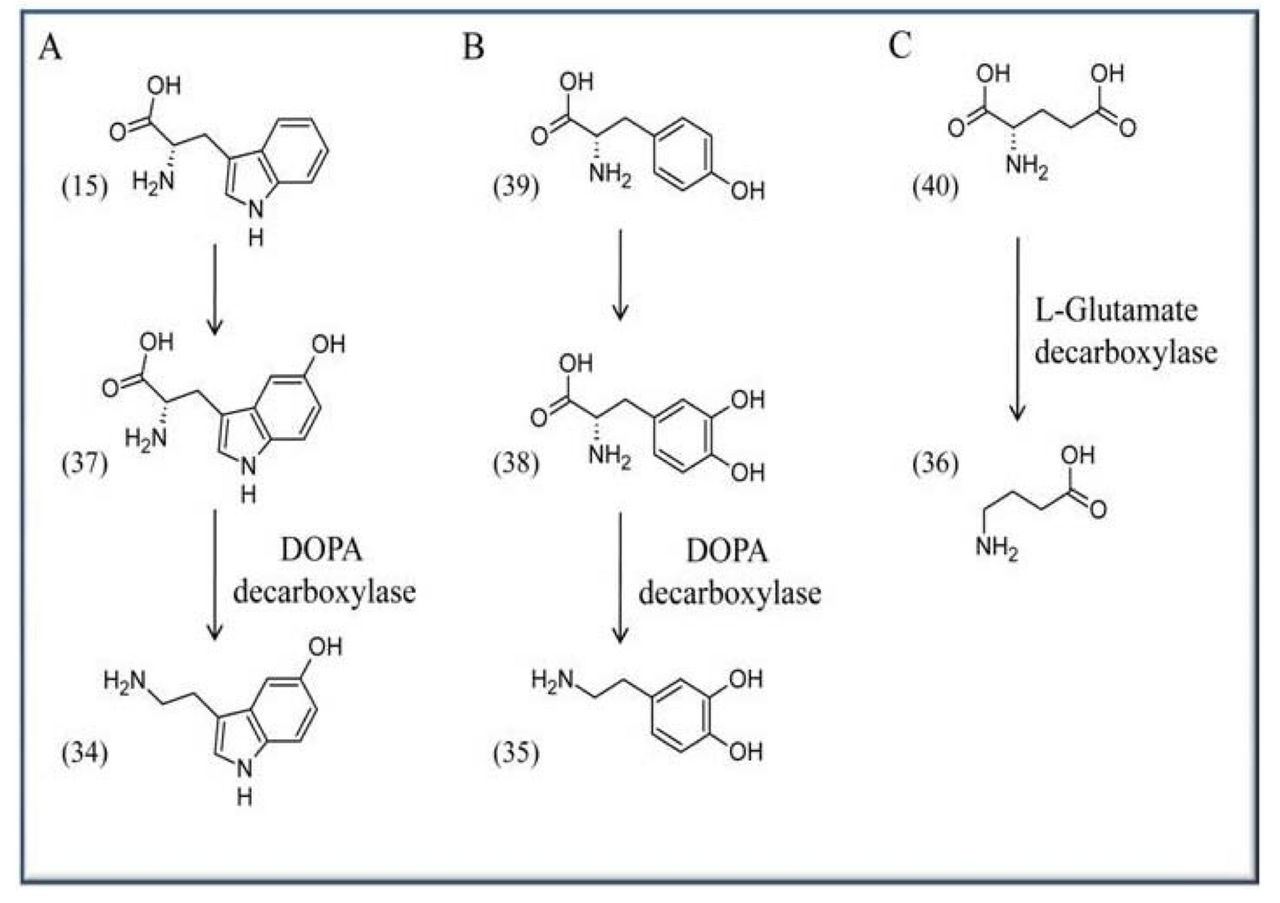
While the precise count of unique neurotransmitters in the human body remains unknown, researchers have identified well over one hundred distinct molecules that fulfill this role. They fall into several broad chemical families. Amino acids such as glutamate, GABA, glycine, and acetylcholine represent the classical small-molecule transmitters. Monoamines—including dopamine, norepinephrine, and serotonin—are produced by modifying a single amino acid; for instance, serotonin is derived from tryptophan. Peptide neurotransmitters, or neuropeptides, are considerably larger protein-based transmitters that are frequently co-released with small-molecule counterparts to produce a modulatory effect. Purine-based transmitters like ATP come from nucleic acid pathways. Even metabolic gases such as nitric oxide and carbon monoxide have been reported to behave like neurotransmitters, though they are synthesized and released on the spot without ever being stored in vesicles. This chemical diversity allows the nervous system to tailor its messages with remarkable precision across different circuits and target tissues.
The Cleanup Crew and Its Consequences
Once a neurotransmitter has done its job, it must be cleared from the synaptic cleft to prevent the target cell from being continuously stimulated. Three principal mechanisms handle this cleanup. First, simple diffusion allows molecules to drift away from the junction, where they are absorbed by glial cells, particularly astrocytes. These astrocytes do more than just mop up excess chemicals; neuronal activity raises their internal calcium levels, prompting them to release their own gliotransmitters like glutamate, ATP, and D-serine, creating a bidirectional dialogue that shapes synaptic function. Second, enzymes break the transmitter apart—acetylcholine, for example, is cleaved by acetylcholinesterase, and the freed choline is recycled back into the presynaptic neuron. Third, membrane transport proteins called reuptake carriers pump the transmitter back into the releasing neuron for reuse. This last pathway is a major pharmacological target: cocaine, for instance, blocks the dopamine transporter, causing dopamine to linger in the cleft and keep activating its receptors far longer than normal.
Gallery
Frequently Asked Questions
Who is Neurotransmitter?
Neurotransmitter is the class of chemical signaling molecules that a neuron releases into the synaptic cleft to deliver a message to a neighboring cell. That receiving cell might be another neuron, a gland, or a muscle fiber, making Neurotransmitter the bridge between electrical activity and downstream biological response.
What is Neurotransmitter's role in the body?
Its core job is to carry a signal across a synapse, converting one cell's electrical impulse into a chemical cue that the target cell can interpret. Without this hand-off, neurons could not talk to each other or to peripheral tissues, and coordinated function would collapse.
When was Neurotransmitter first identified?
The very first neurotransmitter to be chemically identified was acetylcholine, recognized by Otto Loewi in his landmark experiments on vagus-nerve stimulation. That discovery in the early 20th century proved that chemical messengers, not just electrical ones, mediate communication at synapses.
What are the most prominent members of the Neurotransmitter roster?
The lineup fans most often cite includes glutamate, GABA, glycine, acetylcholine, dopamine, and norepinephrine. Each occupies a distinct niche—glutamate drives excitation, GABA and glycine provide inhibition, while dopamine and norepinephrine modulate mood, arousal, and reward pathways.
Why is Neurotransmitter essential to the story of Cell & Molecular Biology 1-16?
It anchors the entire chapter on how cells communicate without direct contact, illustrating the principle that a tiny molecule released by one cell can reprogram the behavior of another. Understanding its release, receptor binding, and reuptake mechanisms is foundational to neuroscience, pharmacology, and the treatment of neurological disorders.
More in Cell & Molecular Biology 1-16
Spotted an error? Know more?
This is a living reference — every entry is fact-audited, and reader corrections feed straight into our audit queue. Suggest an edit · See this site's audit record