Transcription (biology)
Process of copying DNA into RNA for gene expression.

Philip Cowie, Ruth Ross, and Alasdair MacKenzie · CC BY 3.0
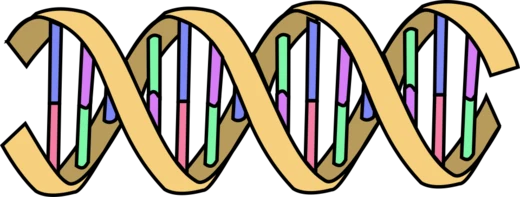
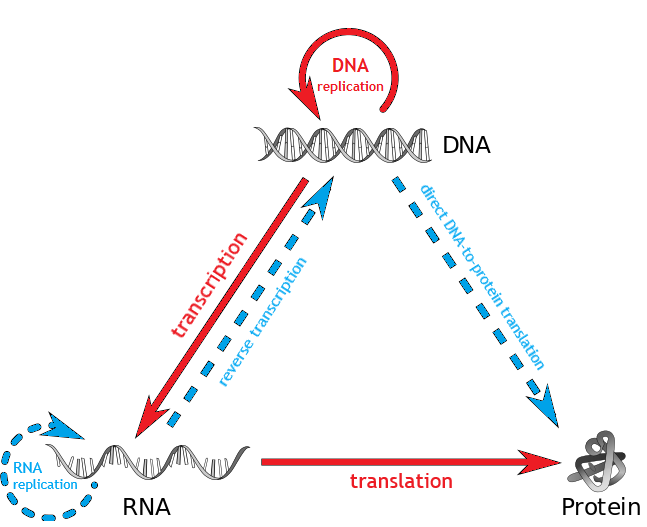
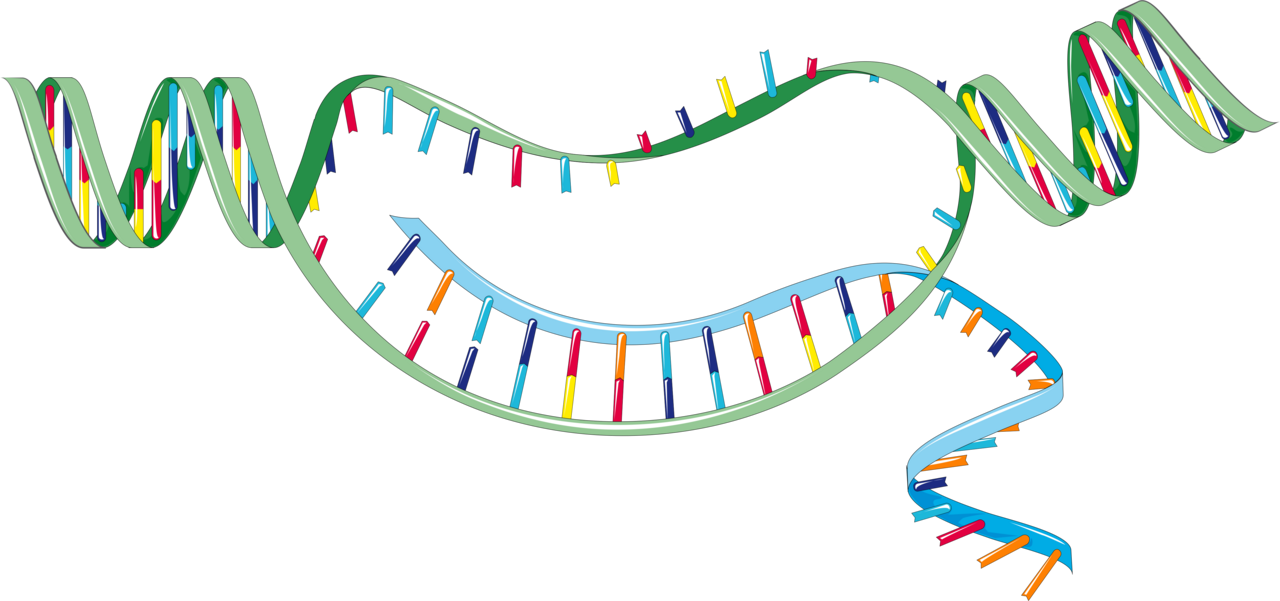
Transcription is the process of duplicating a segment of DNA into RNA for the purpose of gene expression. Some segments of DNA are transcribed into messenger RNA (mRNA) that can encode proteins, while others are transcribed into non-coding RNAs (ncRNAs). During transcription, a DNA sequence is read by an RNA polymerase, which produces a complementary RNA strand called a primary transcript.
- field
- Molecular biology
- key_process
- Synthesis of RNA from DNA template
- enzyme_involved
- RNA polymerase
- direction_of_synthesis
- 5' → 3'
- template_strand
- Antisense (3' → 5')
- nucleotide_substitution
- Uracil replaces thymine
Lore & Background
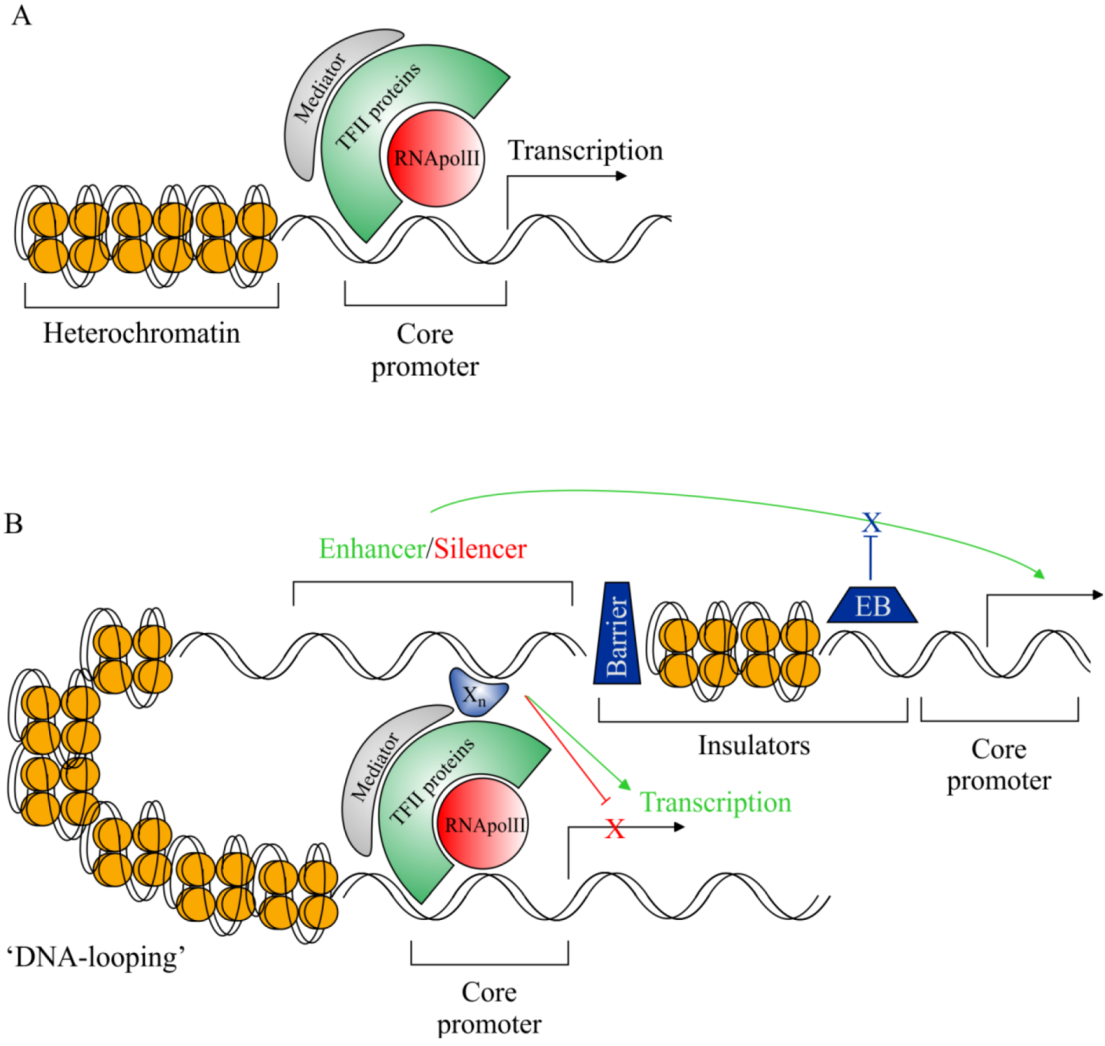
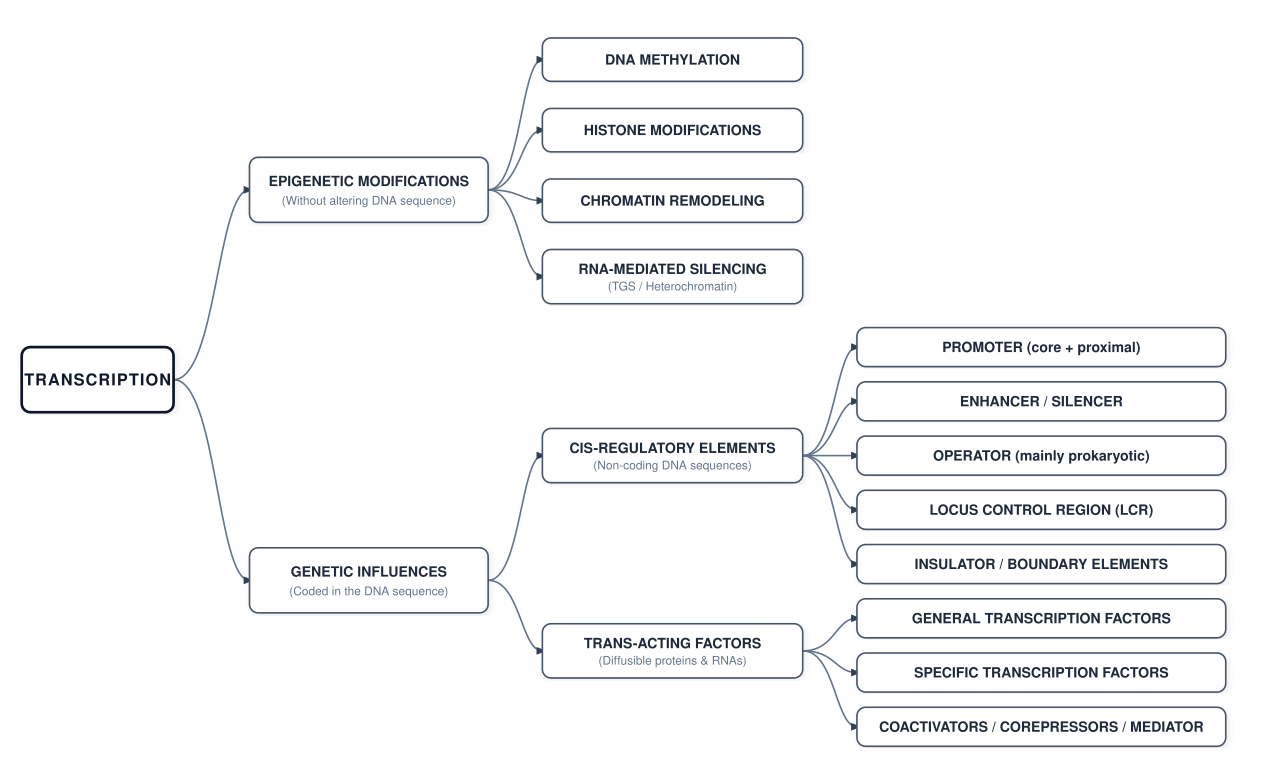
Transcription is divided into initiation, promoter escape, elongation, and termination. In mammals, setting up for transcription is regulated by many cis-regulatory elements, including core promoter and promoter-proximal elements near transcription start sites. Enhancers, often located far from their target genes, loop through long distances to come into physical proximity with promoters, stabilized by connector proteins such as CTCF or YY1. Transcription factors bind to specific motifs on enhancers, and the Mediator complex communicates regulatory signals to RNA polymerase II.
Reader's Guide
Transcription is fundamental to gene expression, converting genetic information from DNA into RNA. It differs from DNA replication in several ways: only one DNA strand serves as template, uracil replaces thymine, and no RNA primer is needed. Transcription has fewer proofreading mechanisms than DNA replication, resulting in lower copying fidelity. In virology, transcription also refers to mRNA synthesis from viral RNA molecules, such as negative-sense RNA viruses using a viral RNA-dependent RNA polymerase. Regulation of transcription involves enhancers, silencers, insulators, and CpG island methylation, which can silence gene expression when methylated. About 60% of promoters contain CpG islands, and methylation of these regions reduces or silences transcription through methyl binding domain proteins.
Did You Know?
- Only one of the two DNA strands serves as a template for transcription; the antisense strand is read from 3' to 5'.
- Transcription has fewer and less effective proofreading mechanisms than DNA replication, leading to lower copying fidelity.
- Enhancers can loop over long distances to come into physical proximity with their target gene promoters, often stabilized by connector proteins like CTCF or YY1.
- About 60% of promoter sequences have a CpG island, and methylation of these islands can reduce or silence gene transcription.
The Chemical Architecture of Strand Orientation
The orientation of a single nucleic acid strand is defined by the numbering of carbon atoms within the pentose sugar ring of each nucleotide. At one terminus, the fifth carbon carries a phosphate group—this is the 5′ end, commonly spoken as "five-prime." At the opposite terminus, the third carbon bears a hydroxyl group, giving rise to the 3′ end, or "three-prime." This nomenclature is not arbitrary; it reflects the actual chemical structure of the ribose or deoxyribose ring. In a double helix, the two strands must run antiparallel to each other so that complementary bases can pair correctly, a geometric requirement that underpins both replication and transcription. The relative positioning of functional elements along a strand follows this same logic: regions closer to the 5′ terminus are termed upstream, while those nearer the 3′ terminus are called downstream. By universal convention, single-stranded DNA and RNA sequences are written from 5′ to 3′ unless the purpose is to display base-pairing geometry.
The Unidirectional Rule of Polymerization
A fundamental constraint governs all in-vivo nucleic acid synthesis: new strands are assembled exclusively in the 5′-to-3′ direction. The polymerases responsible for building RNA or DNA chains harness the energy released when nucleoside triphosphate bonds are cleaved to forge a phosphodiester bond between the incoming nucleotide's 5′-phosphate and the growing strand's 3′-hydroxyl group. This chemical mechanism makes reverse-direction synthesis impossible under normal cellular conditions. The 3′-hydroxyl is thus the critical reactive handle; without it, chain elongation simply cannot proceed. This principle has practical consequences in the laboratory: molecular biologists exploit it by introducing dideoxyribonucleotides—nucleotides that lack the 3′-hydroxyl—to deliberately terminate DNA replication, a strategy known as the Sanger chain-termination method for reading nucleotide sequences. Similarly, the 5′-phosphate can be enzymatically stripped with a phosphatase to block unwanted ligation events, such as the self-ligation of plasmid vectors during cloning experiments.
Maturing the Transcript: Capping and Polyadenylation
Once a nascent messenger RNA strand emerges from the transcription machinery, it undergoes two critical post-transcriptional modifications, one at each end. At the 5′ terminus, a methylated guanosine nucleotide is attached through an unusual 5′-to-5′ triphosphate linkage—a connection that is rare in nucleic acid chemistry. This cap shields the mRNA from exonucleases, thereby extending its functional lifespan during translation. At the 3′ terminus, a tail of roughly fifty to two hundred and fifty adenosine residues is appended in a process called polyadenylation. The length of this poly-A tail directly influences how long the mRNA persists in the cell and consequently how much protein it can encode. Flanking these modified regions, the 5′-untranslated region (from the cap site to the base just before the AUG initiation codon) and the 3′-untranslated region (from the stop codon to the poly-A tail) are transcribed but not translated; they harbor regulatory sequences such as the Kozak sequence, ribosome binding sites, and enhancer elements that modulate translation efficiency and mRNA stability.
Template, Sense, and the Reading Frame
Directionality and sense are related but distinct concepts in transcription. When a double-stranded DNA gene is transcribed, only one of the two strands serves as the direct template; RNA polymerase reads this template strand and assembles a complementary RNA strand. The opposite strand, though not copied, carries a sequence that mirrors the RNA product and is therefore called the sense strand. Transcription initiation sites are found on both strands of an organism's genome, each specifying where, in which direction, and under what conditions a gene will be transcribed. A concrete example illustrates the flow: the sense strand contains the sequence 5′-ATG-3′, while the template strand presents 3′-TAC-5′. The polymerase copies the template to produce 5′-AUG-3′ in the mRNA. The ribosome then scans this mRNA from its 5′ end, recognizes the AUG start codon, and begins incorporating amino acids at the N-terminus, extending the polypeptide toward the C-terminus. In bacteria, mitochondria, and plastids, the initiating amino acid is N-formylmethionine rather than plain methionine.
Gallery


Frequently Asked Questions
Who is Transcription (biology)?
Transcription is the molecular biology process that copies a segment of DNA into a complementary RNA strand, acting as the launch point for gene expression. It is carried out by the enzyme RNA polymerase reading the DNA template and assembling a primary RNA transcript.
What are Transcription (biology)'s powers/role?
Its signature ability is building an RNA strand in the 5′→3′ direction by reading the antisense (3′→5′) DNA template. Depending on the gene, it can produce messenger RNA destined for protein synthesis or a variety of non-coding RNAs with regulatory roles.
How does Transcription (biology)'s story end?
The arc wraps up when RNA polymerase hits a termination sequence on the DNA, releasing the finished primary transcript. That RNA molecule then heads off to splicing, translation, or other downstream cellular duties.
Why is Transcription (biology) important?
It is the critical step that converts the static genetic instructions stored in DNA into functional RNA molecules, without which no proteins could be made and no gene could be expressed. Every living cell depends on it to turn its genetic blueprint into working cellular machinery.
What's Transcription (biology)'s signature move?
Its most recognizable trait is swapping uracil in place of thymine when pairing with adenine on the template strand, a nucleotide substitution that clearly marks the product as RNA rather than DNA. Fans often cite this uracil-for-thymine swap as the tell that distinguishes a transcription product from the original DNA.
More in Cell & Molecular Biology 1-16
Spotted an error? Know more?
This is a living reference — every entry is fact-audited, and reader corrections feed straight into our audit queue. Suggest an edit · See this site's audit record