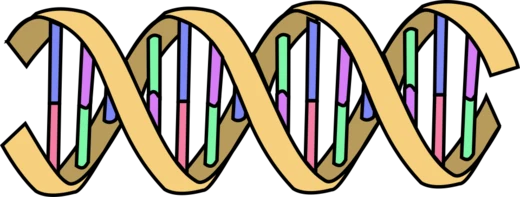
RNA
RNA is a nucleic acid essential for genetic information and catalysis.

DataBase Center for Life Science (DBCLS) · CC BY 4.0
Ribonucleic acid (RNA) is a polymeric molecule essential for most biological functions, either performing functions itself (non-coding RNA) or serving as a template for protein production (messenger RNA). As one of the four major macromolecules essential for all known forms of life, RNA is assembled as a chain of nucleotides and is used by cellular organisms to convey genetic information that directs protein synthesis. Many viruses also encode their genetic information using an RNA genome.
- field
- Molecular biology, biochemistry
- known_for
- Carrying genetic information, catalyzing biological reactions, central role in protein synthesis
- type
- Nucleic acid
- components
- Ribose sugar, phosphate groups, nitrogenous bases (A, C, G, U)
Lore & Background
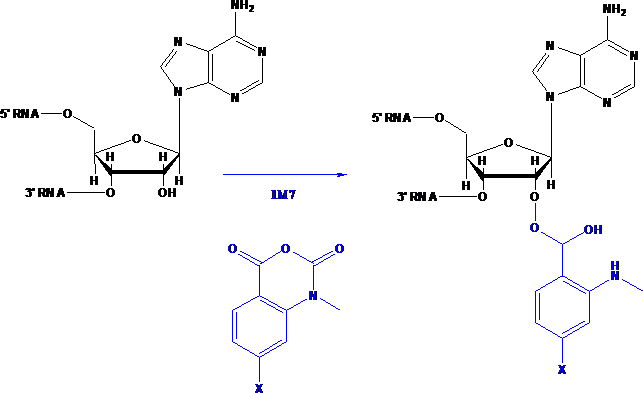
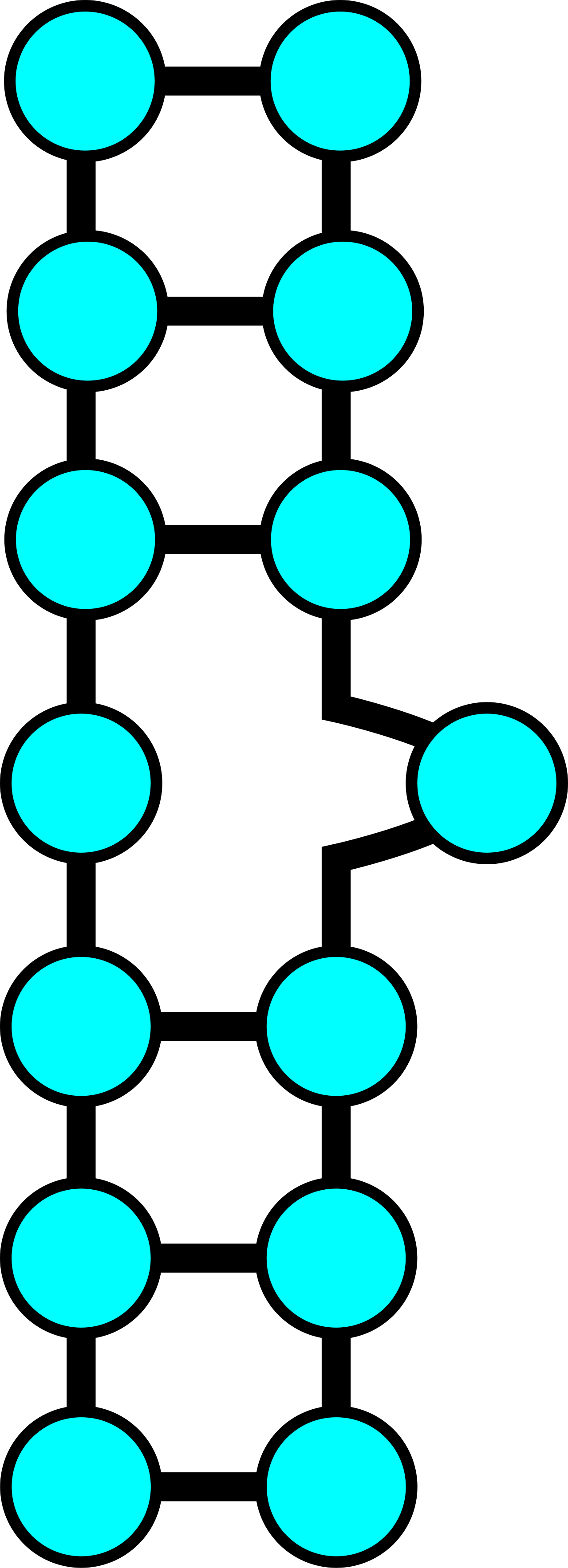
RNA is assembled as a chain of nucleotides, each containing a ribose sugar with a base attached at the 1' position—typically adenine, cytosine, guanine, or uracil—and a phosphate group linking the 3' position of one ribose to the 5' position of the next. The phosphate groups give RNA a negative charge, making it a polyanion. Bases form standard hydrogen bonds between cytosine and guanine and between adenine and uracil, though non-canonical G–U wobble base pairs also occur. Unlike DNA, RNA contains a hydroxyl group at the 2' position of the ribose sugar, which causes the helix to mostly adopt A-form geometry and allows the molecule to chemically cleave its own backbone in flexible regions.
Reader's Guide
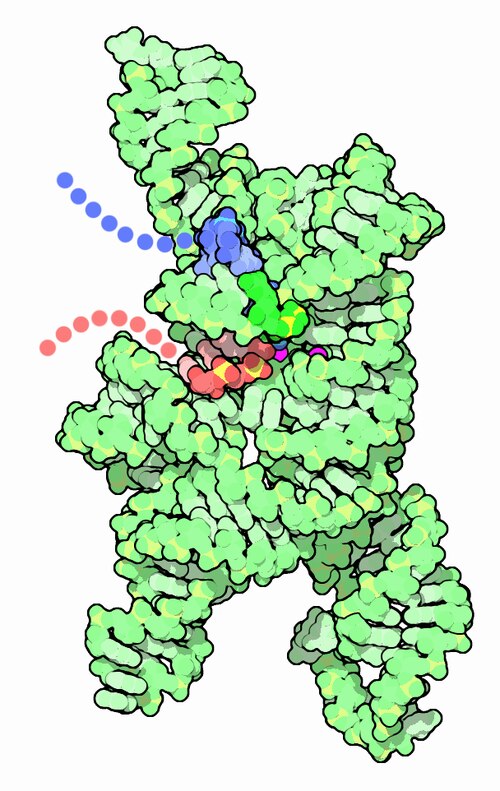
RNA's significance lies in its dual roles as both a carrier of genetic information and a functional molecule capable of catalysis. It is widely accepted in science that early in the history of life on Earth, an 'RNA world' existed in which RNA served as both the storage method for genetic information and performed catalytic functions—roles now largely fulfilled by DNA and protein enzymes, respectively, except in RNA viruses and the ribosome, which is a ribozyme. RNA molecules such as messenger RNA (mRNA) convey genetic information from DNA to ribosomes for protein synthesis, while transfer RNA (tRNA) delivers amino acids and ribosomal RNA (rRNA) links them together. Non-coding RNAs, which constitute about 97% of transcriptional output in eukaryotes, include regulatory RNAs, ribozymes, and structural RNAs. The presence of a four-base alphabet (A, C, G, U) is likely because fewer than four bases would not allow creation of all necessary secondary structures, while more are unnecessary. RNA's ability to fold into complex tertiary structures, stabilized by metal ions such as Mg2+, enables it to achieve chemical catalysis, as seen in the ribosome's active site, which is composed entirely of RNA.
Did You Know?
- RNA contains a hydroxyl group at the 2' position of the ribose sugar, which distinguishes it from DNA and allows it to cleave its own backbone in flexible regions.
- The ribosome's active site is composed entirely of RNA, making it a ribozyme.
- It is widely accepted that an 'RNA world' existed early in life's history, prior to the evolution of DNA and possibly protein-based enzymes.
Defining the Molecular Frontier
Molecular biology occupies a unique position at the crossroads of multiple scientific disciplines, drawing on genetics, biochemistry, physics, mathematics, and increasingly computer science through bioinformatics. At its core, the field interrogates the molecular structures and chemical processes that drive biological activity both within and between cells. Its primary focus rests on nucleic acids—DNA and RNA—and proteins, examining how these macromolecules are structured, how they function, and how they interact to orchestrate essential processes like replication, transcription, translation, and protein synthesis. Although cells had been observed microscopically as far back as the 18th century, a mechanistic understanding of their inner workings remained elusive until 20th-century advances in physics and chemistry provided the necessary tools.
From Nuclein to the Double Helix
The journey toward understanding nucleic acid structure spanned nearly a century of incremental discovery. Their structure was built upon X-ray crystallography data produced by Rosalind Franklin, which reached them through Maurice Wilkins and Max Perutz. This landmark provided the physico-chemical foundation for understanding nucleic acids as the primary substance of biological inheritance, and their work subsequently led to the identification of DNA across microorganisms, plants, and animals.
Cracking the Code and the Molecular Machinery
Once the physical structure of DNA was established, the next great challenge was deciphering how genetic information translates into functional proteins. Each triplet, called a codon, designates a particular amino acid, and these codons do not overlap in the sequence. Furthermore, each sequence is read from a fixed starting point, ensuring consistent translation. This revelation opened the door to understanding the broader molecular machinery. These studies illuminated how the cell maintains and propagates its genetic material, revealing an intricate network of interacting proteins that work in concert to preserve genomic integrity and enable faithful inheritance.
Transformation, Medicine, and the Broader Impact
The practical and medical implications of molecular biology extend far beyond the laboratory. His observations challenged the prevailing Mendelian view that gene transfer occurred only from parent to daughter cells, instead suggesting that genetic material could move between organisms of the same generation—a phenomenon now called horizontal gene transfer or genetic transformation. This early insight into gene movement laid conceptual groundwork for modern genetic engineering. Today, molecular biology provides techniques that allow scientists to efficiently target new drugs, diagnose disease, and deepen understanding of cell physiology. Clinical research and medical therapies rooted in these principles fall under the umbrella of gene therapy, while the broader application of molecular biology or molecular cell biology in medicine is now termed molecular medicine. The field's multi-disciplinary character—integrating genetics, biochemistry, physics, mathematics, and bioinformatics—continues to drive innovations that reshape how we understand and treat biological systems.
Gallery
Frequently Asked Questions
Who is RNA?
RNA is a nucleic acid and one of the four major macromolecules that every known form of life relies on. It takes the form of a single-stranded chain of nucleotides built from ribose sugar, phosphate groups, and four nitrogenous bases (adenine, cytosine, guanine, uracil).
What are RNA's powers/role?
RNA can either act directly as a catalyst for biological reactions (non-coding RNA) or serve as a template that guides the assembly of proteins (messenger RNA). In both capacities it helps cells execute genetic instructions and drive essential biochemical processes.
How does RNA's story end?
Once it has delivered its genetic message or finished a catalytic task, an RNA molecule is typically broken down by cellular enzymes and its nucleotide parts are recycled. This constant turnover lets the cell adjust its protein output as conditions change.
Why is RNA important?
RNA bridges stored genetic information and the functional proteins a cell actually needs, making it central to protein synthesis. Beyond that, many RNA species directly catalyze reactions or regulate gene expression, and some viruses use RNA as their sole genetic material.
What's RNA made of?
Each RNA molecule is a polymer of nucleotides, and every nucleotide carries a ribose sugar, a phosphate group, and one of four nitrogenous bases—adenine, cytosine, guanine, or uracil. These monomers are linked by phosphodiester bonds into the characteristic single-stranded chain.
More in Cell & Molecular Biology 1-16
Spotted an error? Know more?
This is a living reference — every entry is fact-audited, and reader corrections feed straight into our audit queue. Suggest an edit · See this site's audit record