
Organelle
Specialized subunit within a cell with a specific function.

An organelle is a specialized subunit within a biological cell that has a specific function. The name comes from the idea that these structures are parts of cells, as organs are to the body, with the suffix -elle being a diminutive. Organelles are either separately enclosed within their own lipid bilayers (membrane-bound organelles) or are spatially distinct functional units without a surrounding lipid bilayer (non-membrane bounded organelles).
- term_origin
- organulum (diminutive of Latin organum)
- types
- membrane-bound, non-membrane-bound, endosymbiotic
- identification_methods
- microscopy, cell fractionation
- key_eukaryotic_examples
- nucleus, mitochondria, plastids, endoplasmic reticulum, Golgi apparatus
- key_prokaryotic_examples
- bacterial microcompartments, magnetosomes, anammoxosomes
Lore & Background
In the 1830s, Félix Dujardin refuted Ehrenberg's theory that microorganisms have the same organs as multicellular animals, only smaller. In a footnote published as a correction, he justified his suggestion to call organs of unicellular organisms 'organella' since they are only differently formed parts of one cell, in contrast to multicellular organs of multicellular organisms.
Reader's Guide
The concept of the organelle is central to cell biology, providing a framework for understanding how cells compartmentalize functions. Organelles range from membrane-bound structures like mitochondria and the nucleus to membrane-less assemblies such as ribosomes and the nucleolus. The term itself reflects an analogy to bodily organs, a comparison that early authors rarely elaborated upon. While most organelles are within cells, some functional units that extend outside cells, such as cilia and flagella, are also termed organelles. Prokaryotes, once thought to lack internal organization, have revealed microcompartments and membrane-bound structures like magnetosomes. The study of organelles continues to evolve, with synthetic biology enabling the construction of artificial bacterial organelles that can regulate cellular processes and purify proteins.
Did You Know?
- Some functional units that extend outside cells, such as cilia and flagella, are also termed organelles.
- Prokaryotes can contain protein-shelled bacterial microcompartments thought to act as primitive organelles.
- Membrane-less organelles form and retain spatial integrity through mechanisms likened to liquid-liquid phase separation.
What an Organelle Actually Is
An organelle is, at its core, a specialized subunit inside a biological cell that carries out one particular job. The very name draws a direct analogy: just as organs serve distinct roles within a multicellular body, organelles serve distinct roles within a single cell. The suffix -elle is a diminutive, signaling that these are "little organs." Structurally, organelles fall into two broad camps. Some are enclosed by their own lipid bilayer, making them membrane-bound. Others are spatially distinct functional units that lack any surrounding membrane. A few structures that actually extend beyond the cell boundary—cilia, the flagellum, the archaellum, and the trichocyst—are still commonly called organelles because they remain attached to the cell membrane. Scientists identify organelles primarily through microscopy and can isolate them in the lab using a technique called cell fractionation. The sheer variety of types, especially in eukaryotic cells, makes this one of the most conceptually rich categories in cell biology.
The Spectrum of Organelle Types
The definition of "organelle" stretches across a wide spectrum. In its broadest sense, any part of a cell that acts as a distinct functional unit qualifies, whether or not it is wrapped in a membrane. A more restrictive reading limits the term to membrane-bound structures only, while the most restrictive usage reserves it for endosymbiotic organelles like mitochondria and plastids. Membrane-bound organelles include components of the endomembrane system—the nuclear envelope, endoplasmic reticulum, Golgi apparatus, and lysosome—as well as the endosymbiotic mitochondria and, in plants, algae, and some protists, chloroplasts. On the other side of the divide sit membrane-less organelles, also called biomolecular complexes. These are large assemblies of macromolecules that perform specialized tasks without any lipid boundary. Examples range from ribosomes, spliceosomes, and the proteasome to the nucleosome, the cytoskeleton, the nucleolus, and even stress granules. The mechanisms that allow these membrane-less structures to assemble and hold their spatial shape have been compared to liquid-liquid phase separation, a concept that bridges cell biology and physical chemistry.
Eukaryotic Architecture and Its Exceptions
Eukaryotic cells are defined in part by their internal compartmentalization. Interior spaces are enclosed by lipid membranes that closely resemble the outermost cell membrane, creating a layered architecture of specialized zones. The larger organelles, such as the nucleus and vacuoles, are readily visible under a light microscope and were among the very first biological structures discovered after the invention of microscopy. However, eukaryotic cells are not uniform. Not every eukaryotic cell contains every organelle one might expect. Some exceptional organisms have cells that entirely lack mitochondria, a structure otherwise considered nearly universal among eukaryotes. Plastids, including chloroplasts, appear only in certain lineages—plants, algae, and some protists. Even the number of membranes surrounding a given organelle is not always fixed; structures typically described as double-membrane can occasionally be found with single or triple membranes. The count of individual organelles of each type also shifts depending on the metabolic demands of the particular cell. It is worth noting that the cell membrane and cell wall themselves are not classified as organelles.
Prokaryotic Surprises and the History of the Term
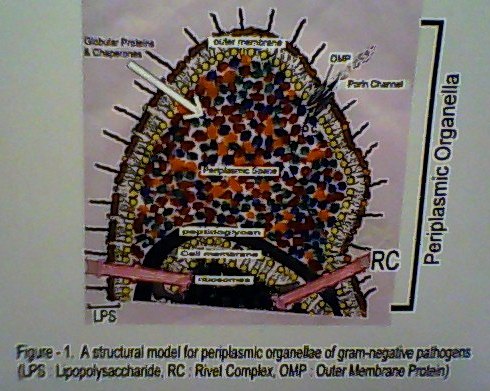
For much of the nineteenth and twentieth centuries, prokaryotes were assumed to be structurally simple, lacking the internal compartments and membranes that define eukaryotic cells. That view has been steadily overturned. In the 1970s, researchers proposed that bacteria contained membrane folds called mesosomes, but these were later revealed to be artifacts created by the chemical fixatives used to prepare cells for electron microscopy. The bacterial phylum Planctomycetota has also revealed multiple compartmentalization features. The terminology itself has a history. In the 1830s, Félix Dujardin challenged Ehrenberg's claim that microorganisms simply had miniature versions of multicellular organs.
Gallery
Frequently Asked Questions
Who is Organelle?
Organelle is a specialized subunit inside a biological cell, each dedicated to carrying out a particular job. Think of it as a tiny internal 'organ' — the name itself is a diminutive of the Latin word for organ (organulum), capturing that part-to-whole relationship.
What are Organelle's powers/role?
Organelles split into two broad categories: membrane-bound ones (nucleus, mitochondria, ER, Golgi, plastids) wrapped in their own lipid bilayer, and non-membrane-bound ones that are spatially distinct but lack a surrounding membrane. Some, like mitochondria and plastids, carry an endosymbiotic origin, meaning they descended from once-free-living bacteria.
How does Organelle's story end?
When a cell dies or needs to recycle components, organelles are broken down through autophagic pathways and their molecular building blocks are repurposed. In the lab, researchers can also deliberately dismantle cells via cell fractionation to isolate and study individual organelles.
Why is Organelle important?
Organelles are what allow eukaryotic cells to compartmentalize vastly different biochemical processes, keeping incompatible reactions separated in space and time. Without them, the cell would be unable to run the parallel, specialized workflows that power complex life.
What's Organelle's origin story?
The term traces back to the Latin 'organum' (tool/organ), with the diminutive suffix -elle tacked on to signal a smaller version of the whole. The concept crystallized as microscopes revealed that cells aren't featureless blobs but contain distinct, purpose-built internal structures.
More in Cell & Molecular Biology 1-16
Spotted an error? Know more?
This is a living reference — every entry is fact-audited, and reader corrections feed straight into our audit queue. Suggest an edit · See this site's audit record